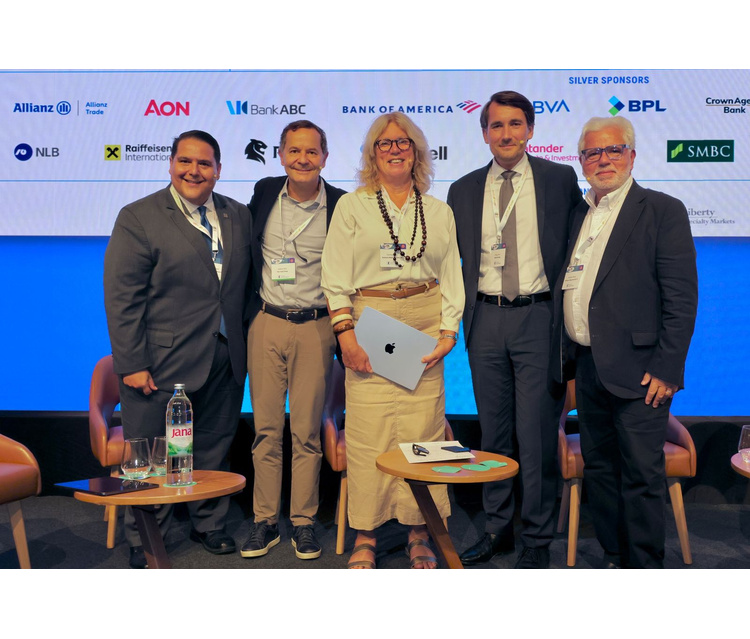
Financing needs across critical raw materials, energy transition and defence supply chains are expanding faster than bank balance sheets, according to speakers cited in ITFA’s report on its 2026 conference in Split. Participants argued that insurers, capital markets and public institutions need to share more risk if funding is to reach producers and smaller suppliers.
General Sir Patrick Sanders, strategic defence adviser to Santander CIB, linked Europe’s security to industrial capacity, resilient supply networks and businesses’ ability to invest before orders arrive. His argument was that deterrence requires a shift away from procurement focused primarily on efficiency towards spare capacity and strategic stocks of commodities and essential components.
Philipp Pforr, senior manager at KfW IPEX Bank, highlighted two financing pressures: liquidity for commodity traders facing margin calls, even when their market exposure is hedged, and investment in processing facilities. Securing raw materials through long-term purchase agreements would not remove dependence on China if Europe still needed Chinese processing capacity, he argued. Pforr also said the bank had changed its approach to defence financing a year earlier, pointing to funding shortages among suppliers rather than major contractors.
Andres Ortiz, a consultant for The Texel Group, said transferring some credit or political risk to highly rated insurers could make transactions acceptable to banks that might otherwise reduce, reprice or reject them. However, insurance assessment extends beyond a buyer’s financial position. According to ITFA’s account, insurers also examine contractual performance, counterparties, ownership documentation, inspection arrangements and the practical ability to deliver goods.
Speakers stressed that financial structuring cannot compensate for weak operational checks. Hernan Mayol emphasised knowing counterparties and visiting operations, while discussion of producer financing highlighted the difficulty of lending before a receivable from an acceptable buyer exists. The panel also identified a circular problem for new producers: banks seek a production record, but establishing one requires finance.
Public support was another focus. Pforr said export credit agencies were important for longer-term deals and cited Germany’s €1 billion Raw Materials Fund, which provides equity to help secure critical raw materials, with KfW serving as the central contact. Mayol argued that greater backing from multilateral institutions and development finance institutions, alongside regulatory relief, was needed to expand private-bank support for smaller businesses.