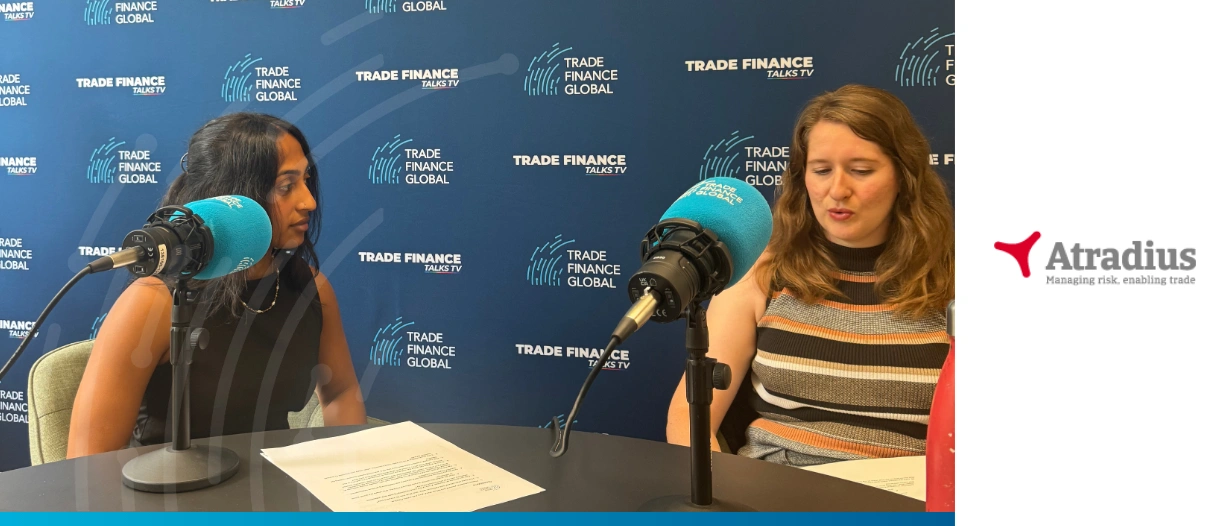
Businesses pursuing overdue payments across borders risk weakening their recovery efforts if they rely too heavily on artificial intelligence, an Atradius executive told Trade Finance Global. Lucy Stagg, regional manager for the UK and Ireland, said translation tools could miss cultural nuances and damage the relationships needed to resolve payment disputes.
The warning comes amid pressure on businesses from economic volatility, supply chain disruption and unpredictable energy costs. Trade Finance Global cited Coface figures showing average UK payment terms of 57 days, among Europe’s longest, with more than 90% of UK businesses experiencing payment delays over the preceding year. That backdrop leaves credit managers weighing which outstanding debts to pursue first.
In an interview with Trade Finance Global’s editor-in-chief, Mahika Ravi Shankar, Stagg described a collection landscape shaped by different legal systems and commercial customs. Interest can serve as a bargaining tool in UK negotiations and may ultimately be waived, whereas the report described Dutch practice as requiring interest and fees in full. Businesses operating under Sharia law cannot charge interest. US recovery procedures also differ between states and often require court judgments to establish that payment is owed.
Stagg argued that local collectors help creditors navigate those differences, providing language skills and an understanding of how negotiations should proceed. AI-generated repayment requests can lose important detail or strike an inappropriate tone, while replacing local intermediaries removes a valuable channel of communication. She also reported lower trust among counterparties who believe AI is being used. Lengthy AI-generated explanations of disputes can obscure the underlying problem, forcing collection agencies to seek clarification in customers’ own words.
Maintaining constructive relationships is especially important when dealing with small and medium-sized enterprises, where one person may handle both sales and collections. Strategies that assume separate commercial and payment teams can therefore be poorly suited to smaller businesses. Stagg emphasised amicable engagement rather than aggressive recovery tactics.
Technology nevertheless has a useful role in reducing administrative burdens, according to the interview. Submitting invoices through payment portals and matching receipts against invoices can consume substantial staff time. Automated reconciliation could release that capacity for direct contact with debtors and relationship-building, which Stagg said delivers better results than automated reminders. She also highlighted the potential of real-time payment information to improve oversight of customers whose creditworthiness is otherwise assessed through infrequent transactions.