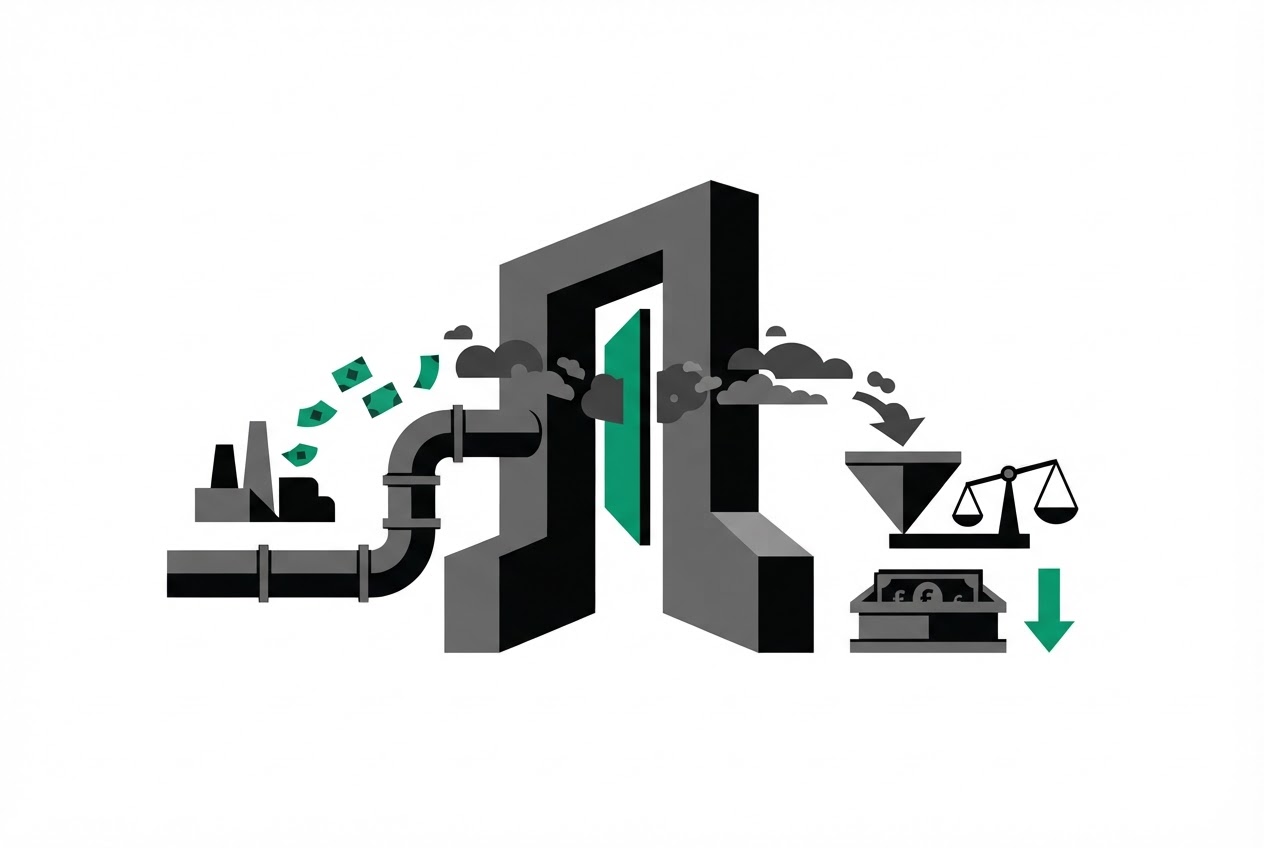
HM Revenue & Customs has published illustrative rates for the UK’s forthcoming carbon border levy, putting charges for steel, aluminium and cement imports below £10 per tonne of emissions. Trade Finance Global reported that the figures, released on 16 October, show how free carbon allowances for British producers would reduce the corresponding charge on imports. HMRC cautioned that the figures are neither forecasts nor a basis for tax liability.
The UK Carbon Border Adjustment Mechanism, or CBAM, is due to begin on 1 January 2027. Its purpose is to discourage carbon-intensive production from shifting abroad as Britain cuts emissions, by charging imported goods an amount that reflects the carbon costs faced by domestic manufacturers. Based on the current data, the illustrative charge is £9.79 per tonne of CO₂ equivalent for aluminium, £9.69 for iron and steel, £9.24 for hydrogen and £8.78 for cement. Fertiliser has a substantially lower indicative rate of £1.45.
Those levels sit well below the £58.15 average price per tonne achieved at UK Emissions Trading Scheme auctions between July and September, according to Trade Finance Global. Under that scheme, businesses need a permit for each tonne of carbon emitted, but receive some allowances without charge. The border levy is adjusted to account for those free allocations, rather than applying the full auction price to imported goods.
Cement illustrates the effect of that adjustment. Free permits cover 87.1% of the sector’s direct emissions, with that proportion then reduced using a 97.5% phase-out factor for 2027. The resulting calculation leaves importers facing approximately 15% of the full carbon price. Rates will be updated quarterly to capture both changes in ETS prices and the progressive removal of free allowances, meaning levies are likely to increase as that support is withdrawn.
The report said the calculation methodology is contained in the Finance Act 2026, while secondary legislation establishes the schedule for withdrawing free permits. The figures remain provisional: emissions information supplied by operators through the ETS baseline reporting process is still under review by the UK ETS Authority and may be revised.